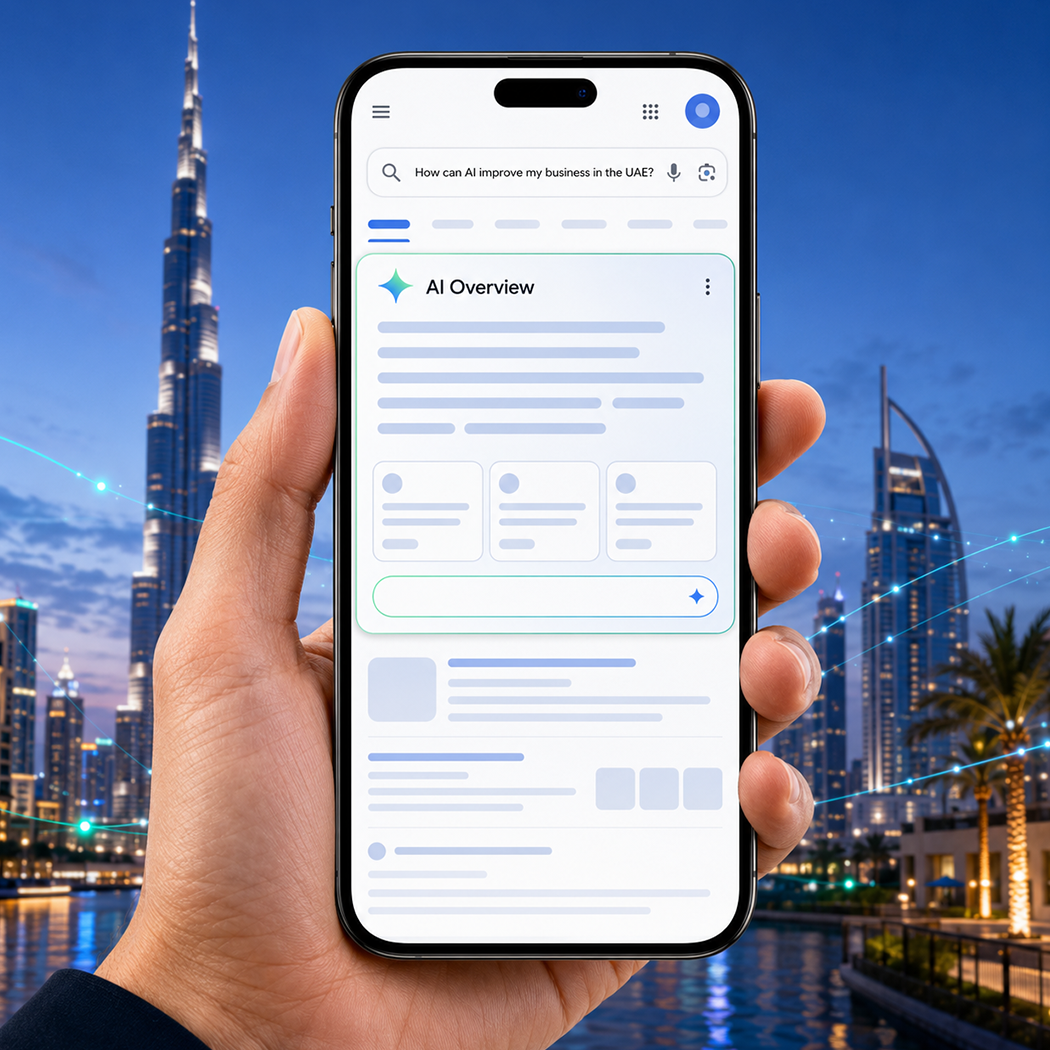
The hospitality industry in Dubai is one of the most competitive in the world. From luxury hotels and resorts to boutique stays and serviced apartments, businesses are constantly competing for the attention of local and international travellers.
Having excellent facilities and outstanding customer service is important, but it is no longer enough to keep your rooms full throughout the year.
Today’s guests begin their journey online. They compare hotels, read reviews, browse social media, and search Google before making a booking. If your business is not visible where potential guests are searching, you may lose bookings to competitors before they even visit your website.
This is where a well-planned hospitality marketing strategy makes a difference.
The right strategy helps you reach the right audience, build trust, increase direct bookings, and create memorable experiences that encourage guests to return.
In this guide, we’ll explore practical hospitality marketing strategies that can help hotels and hospitality businesses attract more guests and build long-term growth.
Why Hospitality Marketing Matters More Than Ever
Guest behaviour has changed significantly over the past few years. Instead of relying on travel agents or recommendations alone, travellers now research destinations online before making a decision.
A typical guest may:
- Search Google for hotels in Dubai.
- Compare prices across multiple websites.
- Read online reviews.
- Visit your social media profiles.
- Explore your website.
- Check photos and videos.
- Look for special offers.
- Book directly or through an online travel platform.
Every interaction influences their decision.
This means hospitality marketing is no longer just about promoting your business. It is about creating a seamless digital experience that builds confidence at every stage of the customer journey.
Whether you manage your marketing in-house or work with a Digital Marketing Agency, your goal should be to ensure potential guests can easily discover your business, trust your brand, and complete their booking with confidence.
Businesses that consistently appear across search engines, social media platforms, review websites, and other digital channels are often more likely to attract attention, generate bookings, and build long-term customer loyalty.
Strategy 1: Understand Your Ideal Guest
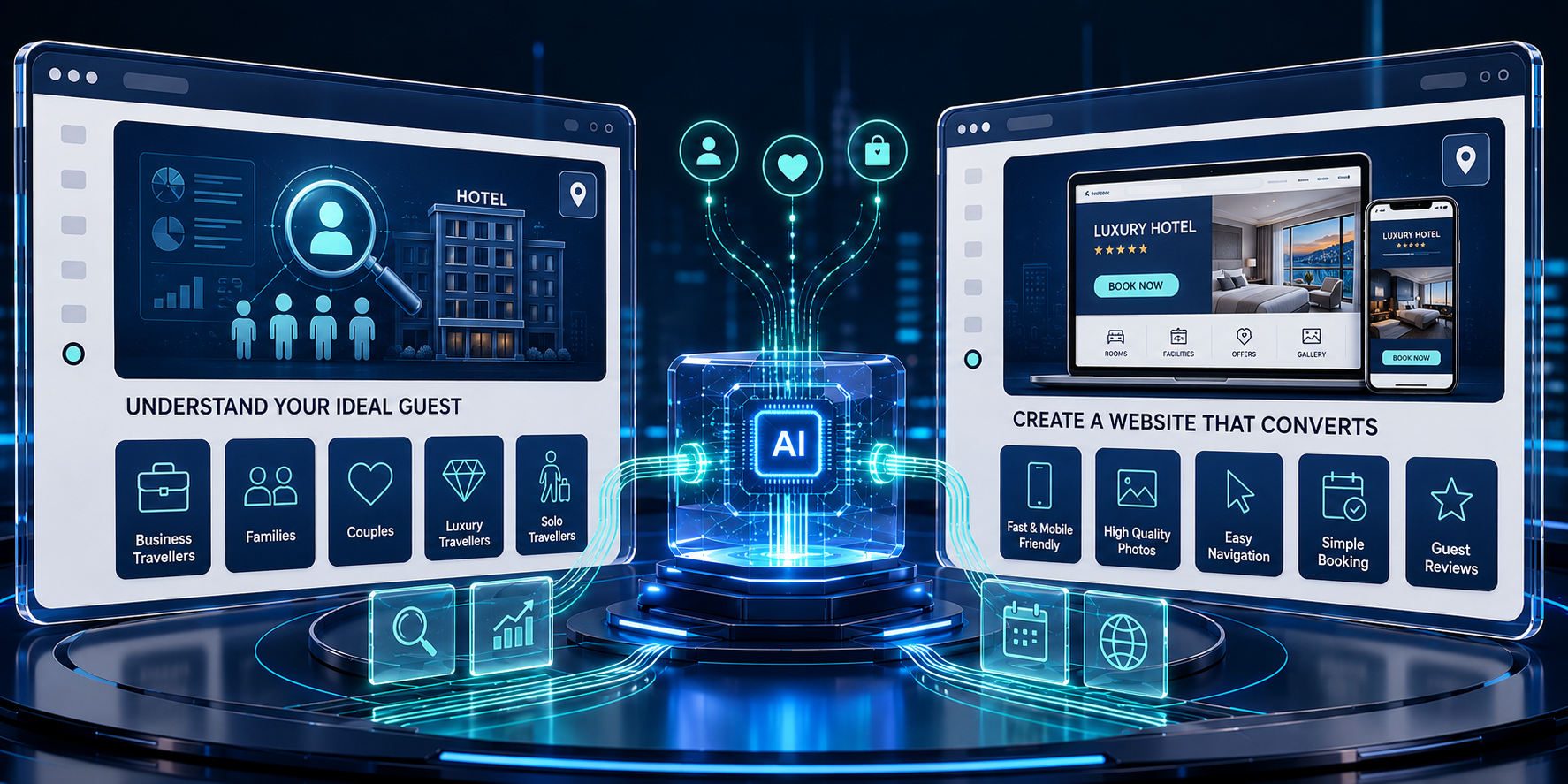
Every successful hospitality marketing strategy begins with understanding your audience. Trying to attract everyone usually results in marketing that fails to connect with anyone. Instead, focus on the guests who are most likely to choose your property and tailor your marketing around their needs.
Depending on your business, your ideal guests may include:
- Business travellers
- Families
- Couples
- Luxury travellers
- Solo travellers
- Staycation guests
- International tourists
Each audience has different expectations.
For example, business travellers often value convenient locations, high-speed internet, and meeting facilities. Families usually look for spacious rooms, child-friendly amenities, and attractions nearby. Luxury travellers are more interested in personalised service, premium experiences, and exclusive facilities.
When you understand what matters most to your guests, you can create marketing campaigns, offers, and content that feel more relevant. This increases engagement and makes it easier to attract the right audience instead of simply attracting more visitors.
Strategy 2: Create a Website That Converts Visitors into Guests
Your website is often the first place potential guests interact with your brand. A professional website builds trust, but it should also make it easy for visitors to become paying guests.
An effective hospitality website should include:
- Fast loading pages
- Mobile-friendly design
- High-quality photography
- Clear room and facility information
- Transparent pricing
- Simple navigation
- An easy booking process
- Contact information
- Genuine guest reviews
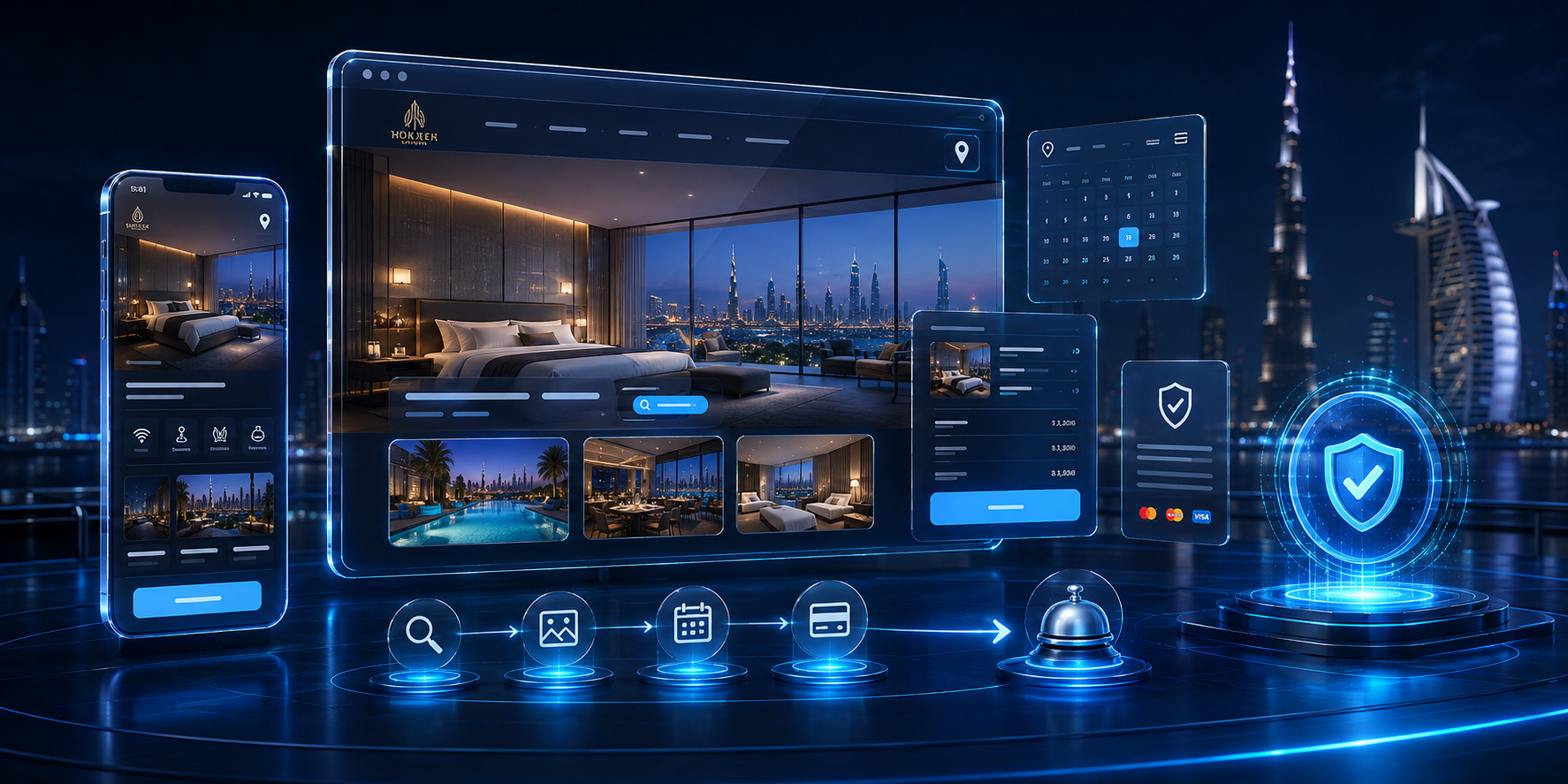
Many travellers compare several hotels before making a booking. If your website is slow, difficult to navigate, or missing important information, they are likely to leave and choose another property.
Your website should answer the questions guests have before they ask them. Clear information, strong visuals, and a straightforward booking experience help reduce uncertainty and encourage more direct bookings.
Many businesses invest in hospitality marketing services in Dubai to improve their website performance, enhance the user experience, and optimise their online presence. Whether managed internally or with the support of experienced marketing professionals, a well-optimised website remains one of the most effective tools for attracting guests and increasing direct bookings.
Strategy 3: Improve Your Visibility on Google
Most guest journeys begin long before someone visits your website. Whether they’re planning a holiday or a business trip, many travellers start by searching on Google for accommodation in their chosen destination.
They may search for:
- Best hotels in Dubai
- Family hotels near Downtown Dubai
- Luxury resorts in Dubai
- Beachfront hotels in Dubai
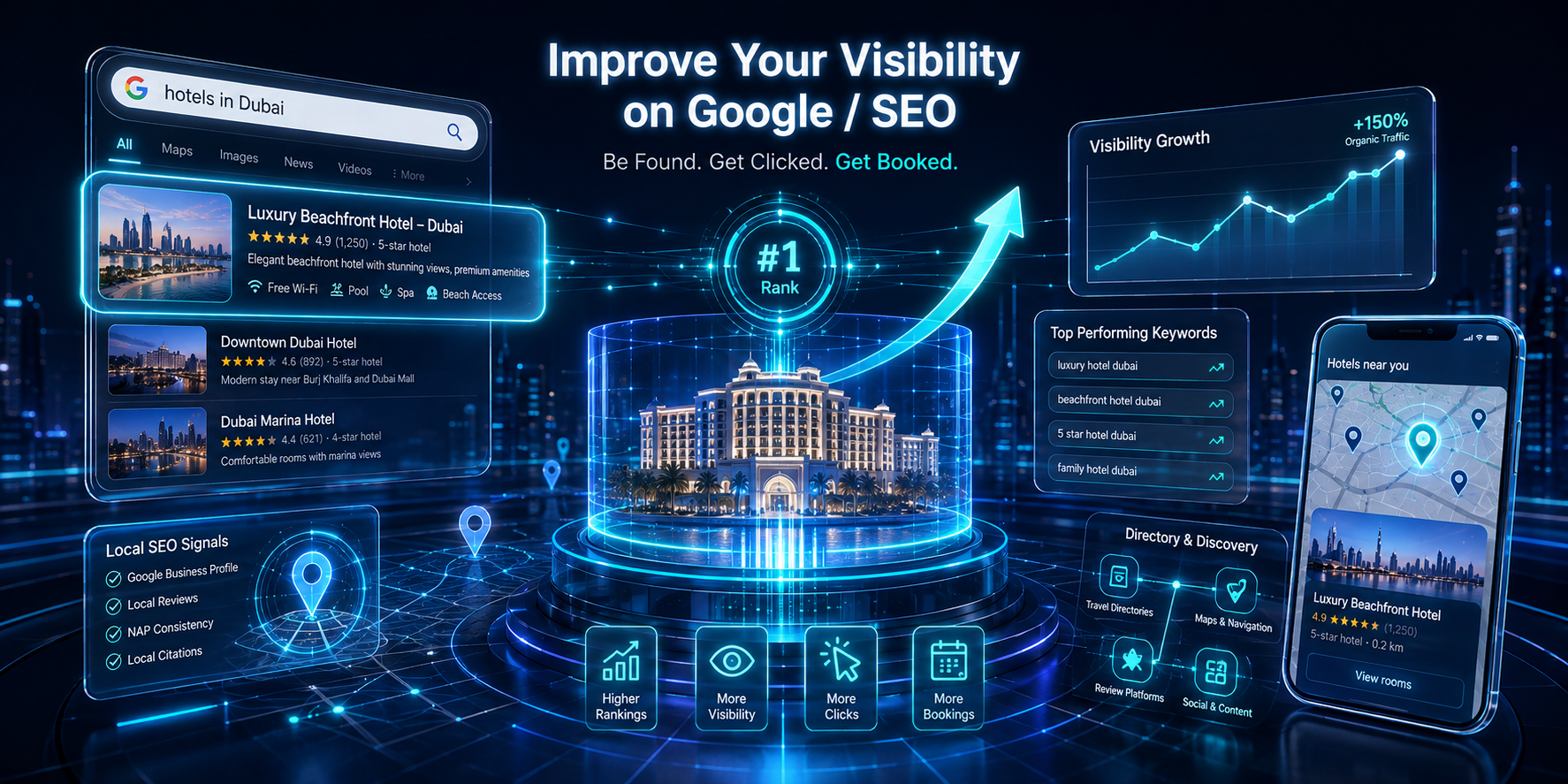
Appearing in these search results helps your business connect with people who are actively looking for a place to stay.
This is where search engine optimization (SEO) becomes an important part of your hospitality marketing strategy.
SEO helps improve your website’s visibility in search results, making it easier for potential guests to discover your property.
Some SEO best practices include:
- Creating helpful and relevant content
- Writing clear page titles and meta descriptions
- Using location-specific keywords naturally
- Improving website speed and mobile performance
- Earning backlinks from trusted websites
- Keeping your business information consistent across online directories
Unlike paid advertising, SEO continues to generate long-term value by attracting qualified visitors who are already searching for accommodation or travel information.
Strategy 4: Create Helpful Content for Travellers
Travellers don’t just search for hotels. They also search for information that helps them plan their trip. Creating useful content allows you to answer those questions while introducing potential guests to your property.
For example, you could publish articles about:
- Things to do near your hotel
- Weekend itineraries in Dubai
- Family-friendly attractions
- The best restaurants and cafés nearby
- Seasonal events and festivals
- Travel tips for first-time visitors
This type of content provides value before a booking is made. It also helps build trust by showing that your business understands the local area and wants to help guests make the most of their visit.
Publishing helpful content also supports your SEO efforts by giving your website more opportunities to appear in relevant search results.
Over time, a well-planned content strategy can increase organic traffic, strengthen your online authority, and attract more guests who are already interested in visiting Dubai.
Strategy 5: Build Trust Through Online Reviews
Online reviews have become one of the biggest influences on booking decisions. Before choosing a hotel, many travellers compare reviews across platforms such as Google, TripAdvisor, and Booking.com. They want to know what previous guests experienced and whether your property delivers on its promises.
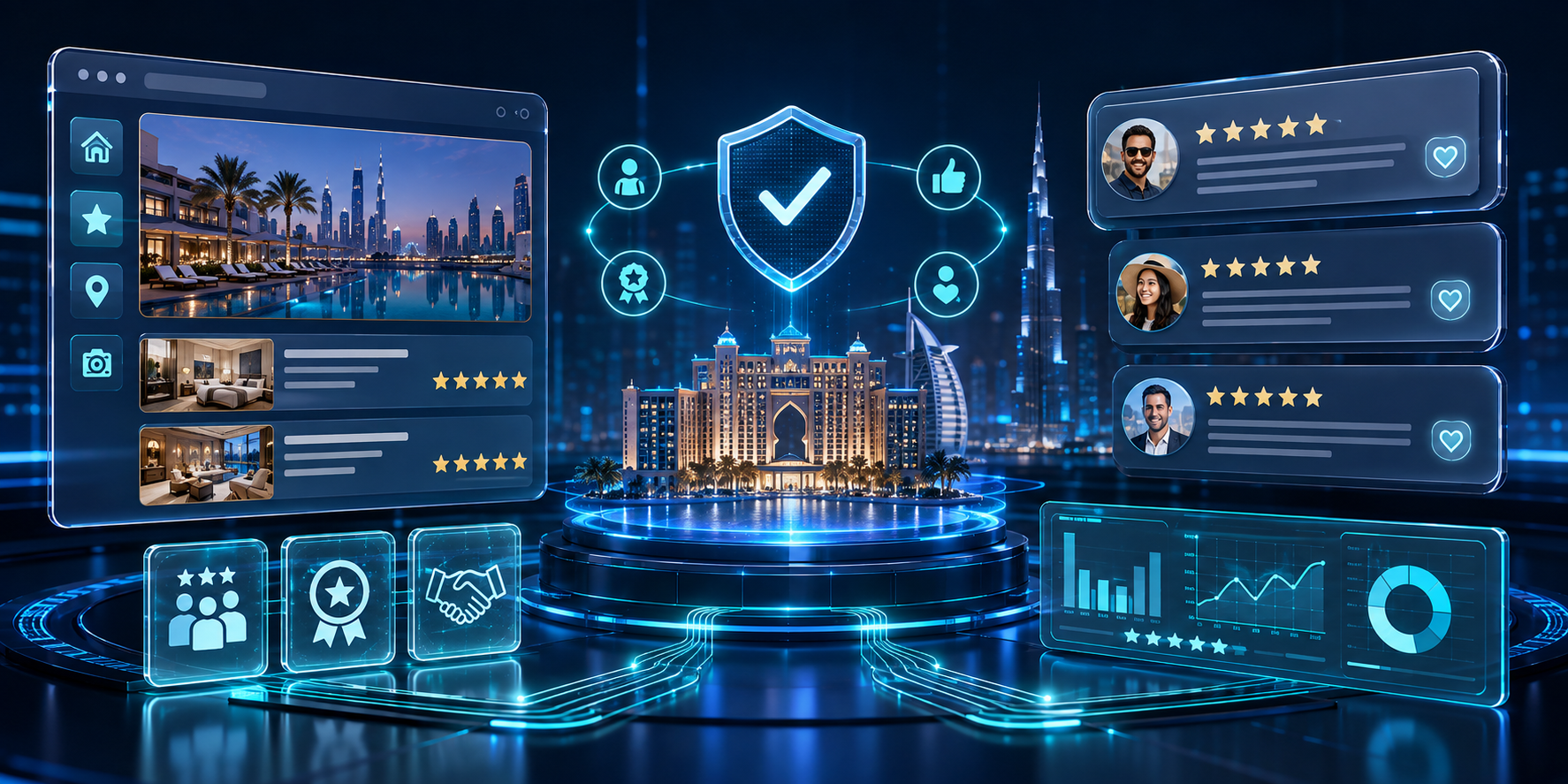
Positive reviews build confidence, while professional responses to negative feedback show that you value customer satisfaction and are committed to improving the guest experience.
To strengthen your online reputation:
- Encourage satisfied guests to leave honest reviews after checkout.
- Send a follow-up email with a direct review link to make the process simple.
- Respond to every review professionally, whether it is positive or negative.
- Thank guests for their feedback and address concerns respectfully.
A strong review profile does more than influence booking decisions. It also supports your local SEO efforts by helping your business appear more prominently in Google search results and Google Maps.
Strategy 6: Use Social Media to Inspire Future Guests
Travellers rarely book a hotel based on room rates alone. They want to imagine the experience before making a reservation.
Social media gives hospitality businesses the opportunity to showcase that experience and build excitement before a guest even visits the website.
Rather than focusing only on promotions, create content that highlights what makes your property unique.
Some content ideas include:
- Scenic views from your property
- Guest rooms and suites
- Signature dishes from your restaurant
- Spa and wellness facilities
- Local attractions and experiences
- Seasonal events and celebrations
- Behind-the-scenes moments with your team
- Guest testimonials shared with permission
High-quality photography and short-form videos often generate higher engagement because they help potential guests visualise their stay.
Consistency is also important. Posting valuable content on a regular schedule helps keep your property visible, strengthens brand awareness, and encourages travellers to consider your hotel when planning their next trip.
Many hospitality businesses choose to work with a Social Media Marketing Agency to develop a consistent content strategy, manage campaigns, and engage with their audience across multiple platforms. Whether managed in-house or by experienced professionals, a strong social media presence plays an important role in attracting more guests and building long-term brand recognition.
Strategy 7: Stay Connected with Email Marketing
Not every visitor books a room the first time they visit your website. Some travellers compare multiple hotels before making a decision, while previous guests may be planning another trip in the future. Email marketing helps you stay connected with both groups and keeps your property top of mind.
Rather than sending frequent promotional emails, focus on delivering value.
You can share:
- Seasonal packages and exclusive offers
- Local events happening in Dubai
- Travel tips and destination guides
- Loyalty rewards for returning guests
- Updates about new facilities or services
- Special offers for previous guests
Personalised emails are often more effective than generic campaigns. For example, a returning guest may appreciate an exclusive discount, while someone who previously stayed during a business trip may be interested in corporate travel packages.
Building relationships with past guests encourages repeat bookings, strengthens customer loyalty, and reduces the cost of acquiring new customers.
Strategy 8: Partner with Local Businesses
Guests are looking for memorable experiences, not just a place to stay. Partnering with local businesses allows you to create added value while introducing your property to new audiences.
Depending on your location, you could collaborate with:
- Tour operators
- Restaurants and cafés
- Theme parks
- Luxury transport providers
- Event organisers
- Shopping destinations
- Wellness centres
- Adventure experience providers
These partnerships can help you create attractive packages that encourage guests to choose your property over competing hotels.
For example, a hotel could offer a weekend package that includes accommodation, breakfast, and discounted entry to a popular attraction in Dubai. This gives guests a more complete travel experience while making your offer more appealing.
Local partnerships also strengthen your reputation within the tourism industry and create opportunities for cross-promotion, helping both businesses reach a wider audience without relying solely on paid advertising.
Strategy 9: Invest in Professional Photography and Video
Hospitality is one of the most visual industries. Before making a booking, potential guests want to see exactly what they can expect from your property.
High-quality photography and video help create a strong first impression, build trust, and encourage travellers to choose your hotel over competitors.
Your visual content should showcase:
- Guest rooms and suites
- Restaurants and dining experiences
- Swimming pools and wellness facilities
- Meeting and event spaces
- Outdoor areas and scenic views
- Hotel amenities
- Nearby attractions and local experiences
Video content is equally valuable. Short videos featuring room tours, hotel facilities, dining experiences, or local attractions can help travellers visualise their stay and increase engagement across your website and social media platforms.
Authentic visuals set realistic expectations, strengthen your brand, and give guests the confidence to book directly with your property.
Strategy 10: Personalise the Guest Experience
Today’s travellers expect more than excellent service. They value experiences that feel personal and tailored to their needs.
Personalisation helps hospitality businesses build stronger relationships with guests while encouraging repeat visits and positive recommendations.
Simple ways to personalise the guest experience include:
- Sending personalised welcome messages before arrival
- Offering exclusive discounts for returning guests
- Celebrating birthdays and anniversaries with special touches
- Recommending local attractions based on guest interests
- Remembering room preferences for future stays
Technology can help deliver personalised experiences, but it should always support genuine hospitality rather than replace it.
Guests who feel recognised and appreciated are more likely to leave positive reviews, recommend your property to friends and family, and return for future stays. Over time, these long-term relationships become one of the most valuable assets for any hospitality business.
Strategy 11: Encourage Direct Bookings
Online travel agencies (OTAs) can help increase your property’s visibility, but relying on them alone can reduce your profit margins and limit your relationship with guests.
A strong hospitality marketing strategy should encourage more guests to book directly through your website whenever possible.
Some ways to increase direct bookings include:
- Offering exclusive website-only deals
- Providing flexible cancellation policies
- Including complimentary benefits such as breakfast or late check-out
- Creating a simple and secure booking process
- Displaying genuine guest reviews and testimonials
Guests are more likely to book directly when they feel they are receiving additional value and a seamless booking experience.
Increasing direct bookings not only improves profitability but also gives you greater control over the guest experience from the very beginning.
Strategy 12: Leverage Seasonal Marketing Campaigns
Hospitality demand changes throughout the year, particularly in a global tourism destination like Dubai. Guest preferences, travel patterns, and booking behaviour often vary depending on the season, holidays, and major events.
Instead of using the same promotions throughout the year, create marketing campaigns that align with seasonal demand. This allows you to reach the right audience with relevant offers when they are most likely to book.
Some seasonal campaigns you could plan include:
- Ramadan and Eid packages
- Summer staycation offers
- Christmas and New Year’s Eve celebrations
- Dubai Shopping Festival promotions
- School holiday packages
- Dubai Food Festival experiences
- Major exhibitions and business events
- UAE National Day offers
Prepare your campaigns well in advance by updating your website, scheduling social media content, sending email campaigns, and creating targeted advertisements. Planning ahead gives potential guests enough time to discover your offers and make reservations.
A well-planned seasonal marketing strategy can help increase occupancy during peak travel periods while generating more bookings during quieter seasons. It also keeps your marketing fresh throughout the year and gives previous guests new reasons to return.
Strategy 13: Build a Guest Loyalty Programme
While attracting new guests is essential, encouraging previous guests to return is often more cost-effective and profitable. A well-designed guest loyalty programme helps strengthen customer relationships while increasing repeat bookings.
Rewarding loyal guests also encourages them to book directly through your website instead of using third-party booking platforms.
Your loyalty programme could include:
- Exclusive discounts for returning guests
- Complimentary room upgrades when available
- Early check-in or late check-out
- Reward points for future stays
- Birthday and anniversary rewards
- Member-only offers and seasonal packages
- Complimentary hotel services or dining credits
Keep your programme simple and easy to understand. Guests should clearly know how they earn rewards and the benefits they receive by booking directly with your property.
Loyal guests are more likely to leave positive reviews, recommend your hotel to friends and family, and choose your property for future visits. Over time, a successful loyalty programme can reduce customer acquisition costs, increase guest lifetime value, and create a more predictable source of repeat business.
Strategy 14: Use AI to Improve Your Hospitality Marketing
Artificial intelligence is changing how hospitality businesses attract, engage, and retain guests. Rather than replacing human creativity, AI helps automate repetitive tasks, analyse customer behaviour, and deliver more personalised marketing experiences.
When used strategically, AI can save time while improving the effectiveness of your marketing campaigns.
Some practical ways hospitality businesses can use AI include:
- Creating content ideas for blogs and social media
- Personalising email marketing campaigns
- Analysing guest behaviour and booking trends
- Generating marketing reports and insights
- Improving customer support with AI chatbots
- Identifying high-performing marketing campaigns
- Assisting with keyword research and SEO planning
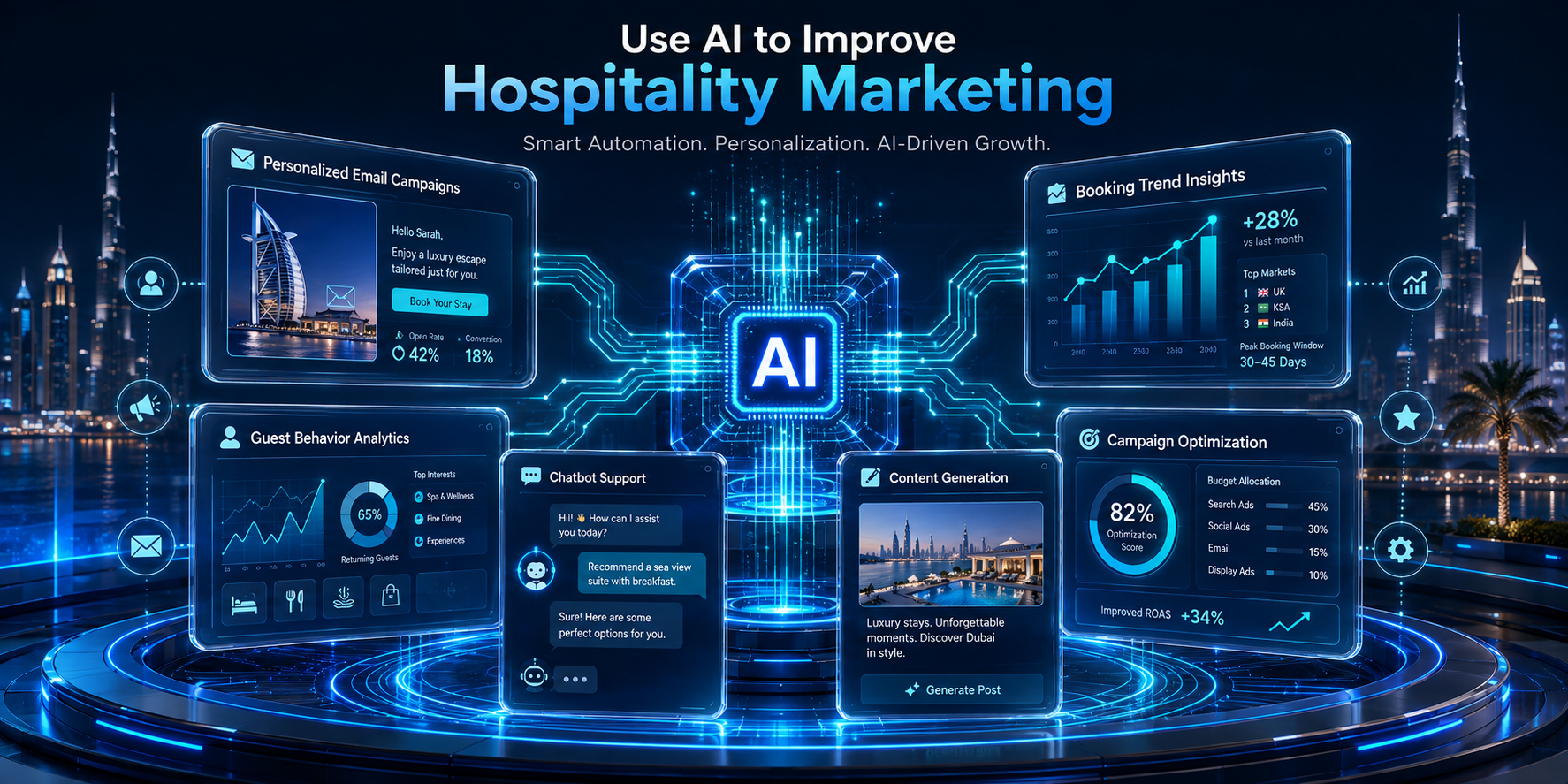
AI can also help marketing teams make faster decisions by analysing large amounts of data that would take much longer to review manually.
However, AI should support your marketing strategy rather than replace it. Successful hospitality brands still rely on human creativity, local market knowledge, and exceptional customer service to build meaningful relationships with guests.
Businesses that combine AI with experienced marketing professionals are better positioned to improve efficiency, create more relevant campaigns, and deliver better guest experiences while staying competitive in a rapidly evolving digital landscape.
Strategy 15: Track and Improve Your Marketing Performance
Every successful hospitality marketing strategy should be measured regularly. Tracking your performance helps you understand which marketing activities are generating bookings, engaging potential guests, and delivering the best return on investment.
Without reliable data, it’s difficult to know where your marketing budget is having the greatest impact or where improvements are needed.
Some important metrics to monitor include:
- Website traffic
- Direct bookings
- Conversion rate
- Average booking value
- Cost per booking
- Organic search traffic
- Social media engagement
- Email open and click-through rates
- Guest review ratings
Review these metrics regularly and compare them over time to identify trends and opportunities. This allows you to refine your marketing strategy, improve underperforming campaigns, and invest more confidently in the channels that deliver the strongest results.
Hospitality marketing is not a one-time effort. Guest expectations, travel trends, and digital marketing channels continue to evolve. Businesses that regularly measure their performance, adapt their strategy, and focus on continuous improvement are better positioned to attract more guests and achieve sustainable long-term growth.
Conclusion
Successful hospitality marketing is about much more than promoting rooms or offering discounts. It is about understanding your guests, building trust, creating memorable experiences, and reaching the right audience through the right marketing channels.
The strategies covered in this guide can help hospitality businesses improve their online visibility, attract qualified guests, increase direct bookings, and build long-term customer loyalty. While every business has different goals, consistently applying these strategies can create a stronger marketing foundation and deliver sustainable growth over time.
The hospitality industry continues to evolve as guest expectations, technology, and digital marketing trends change. Businesses that adapt, embrace innovation, and regularly refine their marketing efforts will be better positioned to stay ahead of the competition.
Whether you manage a hotel, resort, restaurant, serviced apartment, or another hospitality business, investing in a well-planned hospitality marketing strategy can help you attract more guests, strengthen your brand, and achieve long-term success.